

The Best Shopify Chrome Extensions for Store Owners
Running a Shopify store means constantly jumping between tasks: researching products, analyzing competitors, updating product pages, and debugging storefront issues. While Shopify’s admin interface is powerful, much of a store operator’s work happens outside it - across supplier sites, analytics dashboards, marketing tools, and competitor stores.
Chrome extensions can make that workflow significantly smoother. Some help you research products or analyze competitors. Others improve how you navigate Shopify themes or inspect store data. A few even allow you to automate repetitive tasks directly from your browser.
Below are some of the extensions Shopify store owners and developers rely on most in 2026.
Workflow Automation Inside Shopify
Before diving into research or analysis tools, it’s worth mentioning a category that’s becoming more important for operational teams: browser-level workflow automation.
PixieBrix
PixieBrix allows teams to build workflows directly into web pages, including Shopify admin views or supplier sites. Instead of adding one isolated feature, it lets store operators create structured actions that run inside the browser.
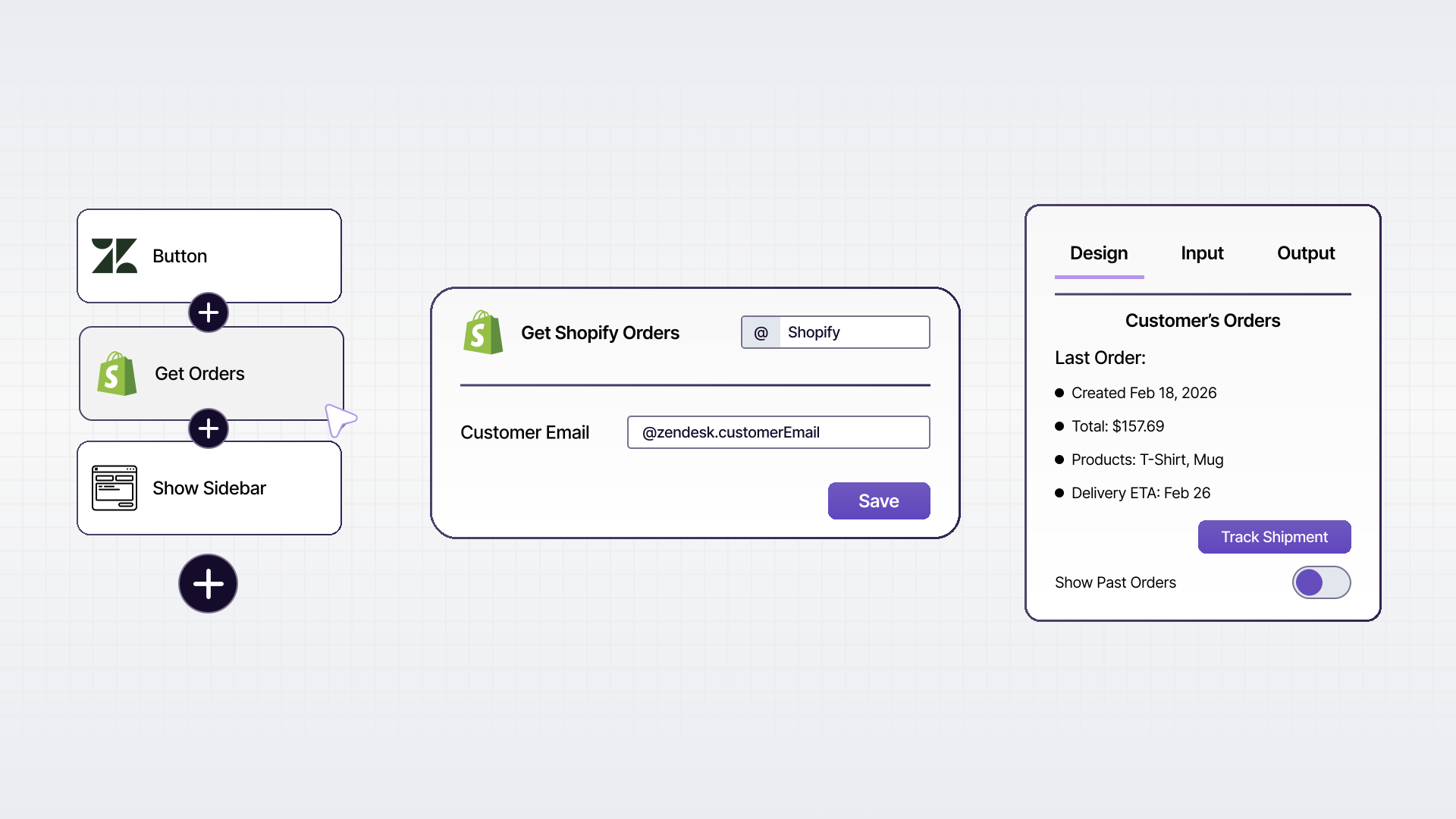
For example, a workflow could extract product data from a supplier site, format it, and prepare it for a Shopify listing. Another workflow might generate an AI-assisted product description or push store updates to Slack.
For teams managing high volumes of products or repetitive operations, this kind of browser-based automation can remove a lot of manual work.
Competitor Research and "Shopify Spy" Extensions
One of the most common reasons merchants install Shopify Chrome extensions is to analyze other stores.
PPSPY
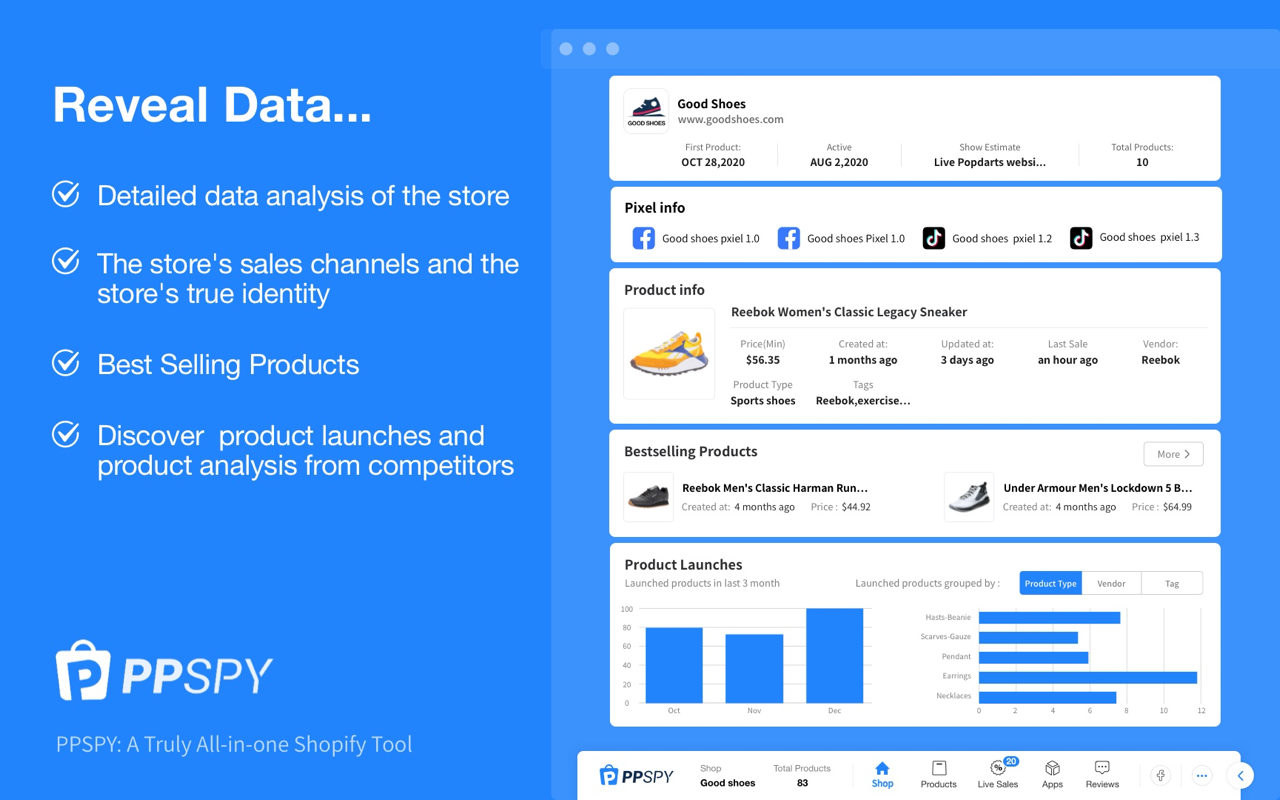
PPSPY is one of the better-known Shopify spy tools. It allows users to inspect Shopify stores and see product data, pricing changes, and sometimes traffic indicators. Merchants often use it to identify trending products or analyze how competitors structure their catalogs.
Koala Inspector

Koala Inspector is another strong option for Shopify store inspection. It’s often used to identify products, themes, and certain store details that help with market research or competitive benchmarking. If you frequently analyze multiple competitor stores, Koala tends to be a staple.
Ali Hunter

Ali Hunter is commonly used for product discovery and competitive research, especially when you’re trying to spot trending items and stores that are scaling. It’s a better fit for merchants actively doing product research rather than developers auditing site setups.
App Detection and Tech Stack Visibility
Shopify App Detector

This is the extension category almost every store owner ends up using at some point. A Shopify app detector helps you identify which apps a store is using, which is useful for figuring out how a competitor is doing subscriptions, upsells, reviews, bundles, popups, search, and so on. If you’re building your own stack and want to avoid guesswork, this is one of the highest ROI installs.
Wappalyzer
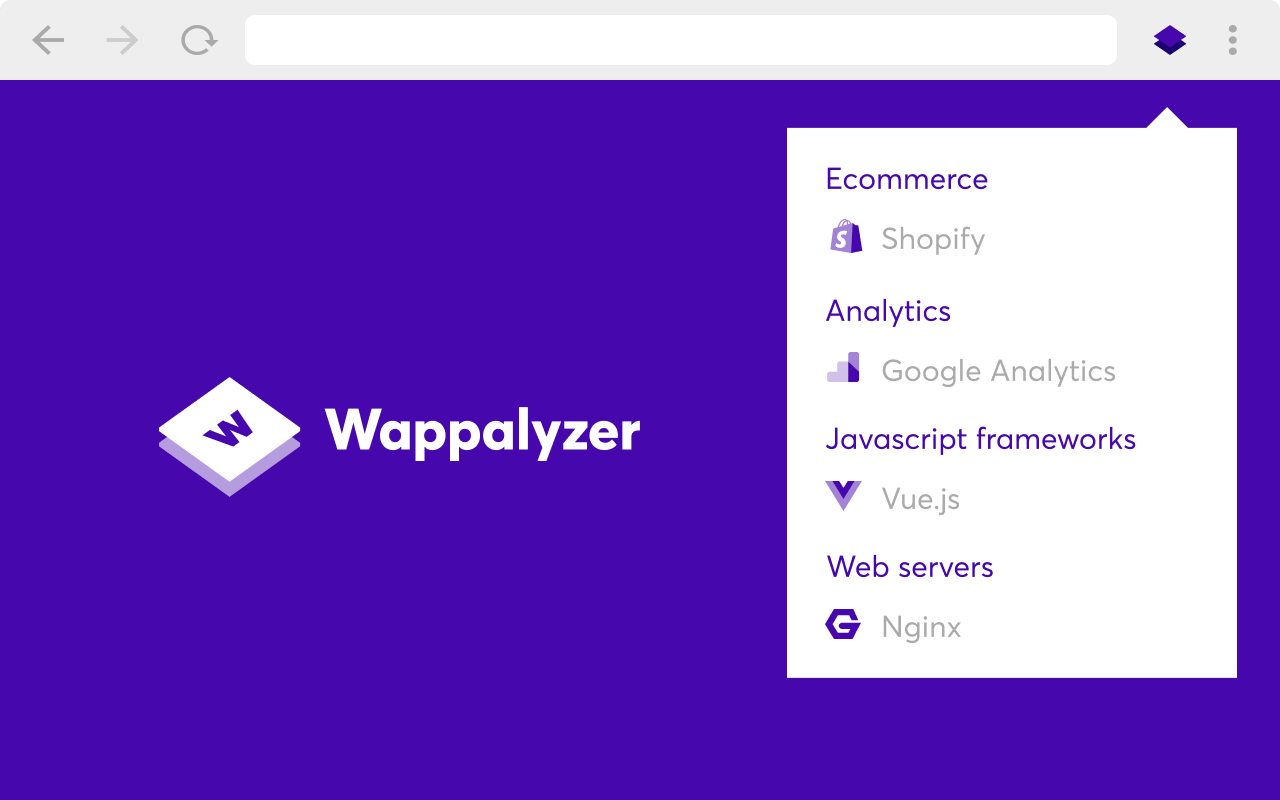
Wappalyzer isn’t Shopify-specific, but it’s a reliable way to identify the broader tech stack behind a site. It’s useful alongside a Shopify app detector, especially when you’re trying to understand analytics tags, CDNs, A/B testing tools, and marketing infrastructure.
Dropshipping and Product Importing
DSers

DSers is one of the most common AliExpress-to-Shopify dropshipping extensions. It’s designed for importing products, managing variants, and streamlining order fulfillment. If your store depends on AliExpress sourcing, DSers is often the starting point.
Importify

Importify is another popular importing extension that supports multiple sources. It’s used when merchants want flexibility beyond a single marketplace or want a smoother import workflow.
A quick note here: dropshipping extensions can generate a lot of operational complexity if your catalog changes frequently. If you’re importing at scale, workflows and automation matter just as much as importing itself.
